|
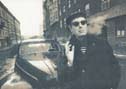
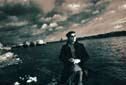
ЕДУАРД СТРАНАДКО "ПЕТЕРБУРГ" EDUARD STRANADKO "PETERBURG" ЭДУАРД СТРАНАДКО "ПЕТЕРБУРГ" |
|
 |

|
ЕДУАРД СТРАНАДКО "ПЕТЕРБУРГ" EDUARD STRANADKO "PETERBURG" ЭДУАРД СТРАНАДКО "ПЕТЕРБУРГ" |
|
|
|
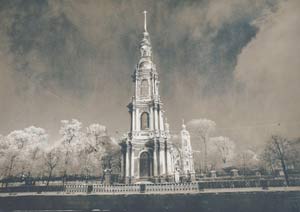
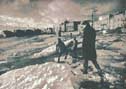
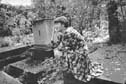
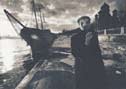
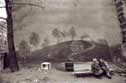
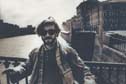
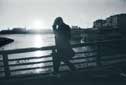
While this text may not bear a direct relation to photography, it beautifully evokes the unique atmosphere of St. Petersburg's creative life in the early 1990s. Holy foolishness, life-creation, performance art..
"They were like aliens from another world; they did not feel the need to
know or do what is universally considered essential here on earth." This
quotation from a popular early-century pamphlet dedicated to the spiritual
feat of holy foolishness seems most fitting to open a conversation about
performance art—a branch of contemporary culture centered on performers.
These are artists whose practice unfolds on the frontier between the real
and the imaginary, the actual and the desired, between what is and what is
yet to be created—between life and art. Performance belongs to both realms
at once, unsettling and provoking them equally; it is neither what art is
expected to be, nor what life is supposed to look like.
The contiguity of performance art and its fundamental refusal to comply with any blueprints make a definitive definition impossible. What is it? Action art, and nothing more? But how does one capture the rich diversity of strategies with which performance executes its subversions on both sides of its domain? It can be mass-oriented yet elitist, contemplative yet aggressive, brutal yet exquisitely intellectual. With the ease of a natural-born invader, it breaks into any territory—from a factory floor to a deserted island. It can weaponize sound, scent, bodily energy, psychedelia, dreams, and telepathy as its raw materials. It claims politics, religion, sports, television, and ordinary everyday life as its theater of operations. From the perspective of modern society, the holy fool is the ideal performance artist. Their life, driven by the goal of never allowing "passion to grow cold," can easily be viewed as an endless succession of happenings, actions, and performances. Through these, the holy fool perfected a repertoire of paradoxes and impossibilities, using them to jolt the spectator-turned-accomplice out of the mundane. Holy foolishness for the sake of Christ, as an "extra-canonical" spiritual feat, emerged in the Orthodox East. It may well have been a belated echo of Sufi practices. It was never truly embraced in Byzantium, and the Roman Catholic Church rejected it entirely. During its zenith, holy foolishness was a formidable force—persecuted yet revered, it stood in opposition to any authority. Holy fools were feared, venerated, and despised. Often beaten by the rabble, they nevertheless spoke with tsars as equals. They committed blasphemy in holy places, yet after death, they were glorified by the Church, their relics laid to rest in temples erected in their name. The "golden age" of independent, uncompromised performance art—when artists deeply felt the struggles of the contemporary world and were ready to suffer its cataclysms firsthand—has long since faded into oblivion. Gone, it seems, are the days when art was deemed truly vital, constructive, and essential—capable of altering the very course of life. The lore of St. Petersburg will surely preserve the appearance in the 1990s of two young artists of Poltava origin, Viktor Snesar and Eduard Stranadko. Obsessed with the idea of—if not turning the world upside down—at least performing a moral feat in the glory of art, they developed the concept of an experimental laboratory called "LIFE." Deliberately manipulating the cliches of mass culture, the artists actively intervened in the city's life by placing objects in the urban environment—on the walls of buildings, lampposts, and sidewalks (such as Viktor Snesar's project "Fixation of Reality," which consisted of installing small metal plates resembling memorial plaques). Believing, after Plato, who "ached in his soul to introduce art into life" (quoted from the project text), that the primary function of art is its cognitive, educational, and healing role, they maximalistically asserted: "If an artist does not know, or cannot explain or teach what he does, he is a charlatan, and therefore, in Plato's view, must be banished from the polis." An acquaintance with Wolfgang Flatz, a progressive Austrian artist living in Munich, convinced the friends that they had chosen the right path. In May 1990, Wolfgang arrived in the USSR with his project "Leningrad," bringing along his artwork, a hundred-page catalog, and a plane full of like-minded companions: fellow artists, art dealers, magazine editors, and scene-goers. Half a year prior, guided by the creative fellowship of the members of the experimental laboratory "LIFE," Flatz had staged a "raid" on a store selling Soviet incunabula and agitprop posters, buying up everything in sight. This gave rise to the works Red Ideology, Brown Aesthetics (Teach Us, Master) and Red Lenin (116 by 209 cm)—an oil portrait of the canonical leader of the global proletariat set against a backdrop of "Peace to the World!" posters. Carved into the brown frame with a knife were the names and dates of nearly every war the USSR had relentlessly waged during the 20th century. "In the East, a poster is never framed because it has nothing to do with art. When I enlarge it, place it within a frame and behind glass, it transforms; it ceases to be a raw template in its original sense because it does not remain the same. Such a poster becomes almost a painting. It gains a metaphorical, symbolic power, transcending pure functionality. The frame elevates the poster; in this instance, it is a Western trait: refinement..." the artist remarked. But above all, what made the Austro-German artist so dear to the members of the newly formed experimental laboratory was his proximity to the Viennese Actionists, alongside his authorship of and participation in numerous performances. (The staging of Flatz’s performance Palais Liechtenstein culminated in his imprisonment in Feldkirch, while the performance Until the Third Anniversary resulted in his commitment to the Valduna psychiatric hospital). In a sense, Flatz was both a public nuisance and a holy fool, yet in a uniquely German understanding of the terms. His "holy foolishness" was not an end in itself, but merely a tool for situational analysis. One of the laboratory’s early actions, Reanimation of the Slavic Image (1991), was an attempt to restore or, at the very least, draw attention to the enduring relevance of the holy fool for the sake of Christ. Was the image of the jester relevant to the "contemporary" art of that time? It seems so. Previous generations of artists worked so long and purposefully to demolish boundaries in art that they completely lost them. Yet in this boundless and weightless world, the artist begins to feel lost, unconvinced of anything except their right to be an artist. And now, art must search for its own borders once again—seeking something unquestionable and immutable. The true holy fool always knew what they lived for, and in whose name. Thus, for today's performance artist, this ideal remains unattainable, yet deeply desired. Would today’s artist not feel a deep kinship with a spiritual feat like that of the Voronezh recluse, Nikanor? He "lived in a cramped closet where he set up a veritable iconostasis with unquenchable icon lamps and candles, placing a black coffin in the middle of the room alongside life's final attributes—a shroud, candles, and incense. In the ceiling of his cell, Nikanor cut a hole from which a voice emerged, absolving the sins of the women lying below in penitence and humility." This "performance" was documented by the researcher Pilyayev in his book Olden Times at the very beginning of the century. The true holy fool never identified with their own body; residing in the flesh, they felt as though they were disembodied, or trapped in a foreign shell. "He was like a fish of the sea or a bird of the air"—thus spoke the disciples of St. Bessarion, the famous Egyptian holy fool. (Here, we refer the reader to Oleg Kulik’s "Animal Party"). Viewed as "not one's own," the body of the holy fool required nothing: neither food, nor sleep, nor movement, nor hygiene. For instance, Stepan Yakovlevich, a holy fool popular in Moscow during the nineteenth century, never bathed, while the no less famous Stepan Mitrich never rose from his bed. By turning the body into an object of creative labor, the holy fool was, in fact, cultivating that very ideal "body without organs," liberated from the "desire-producing machine." For all its manifested presence, the body in a performance also strives toward its "disembodied" state, becoming, as it were, an imitation of itself; it readily yields to transformation and metamorphosis, thereby turning into art.
Olga EGOROVA
|
